You're already paying for a CRM, a project tool, an ad platform, a call recorder, and probably three more things nobody uses much. Now every LinkedIn post is telling you AI agents will replace all of that. So do you stop renewing the SaaS, do you bolt an agent on top, or is the whole thing hype?
Short answer: SaaS is not going away for most jobs in a small firm. AI agents replace a specific slice of it - the part where a human sits in front of the dashboard and does the same clicks every day. Everywhere else, SaaS still wins on price and reliability.
Here's how to tell which is which for your firm.
What people mean by "AI agent" (and why the definition matters)
An AI agent is software where an LLM decides what to do next, uses tools (send an email, edit a row, call an API), and runs a task end-to-end without a human clicking through a UI. A chatbot answers a question. An agent completes a job.
The definition matters because most things sold as "AI agents" today are assistants sitting inside a SaaS - a summary button on top of your CRM, a "draft reply" on top of your inbox. Useful, but the human is still doing the clicking. A real agent is the one that reads the inbound lead, checks the calendar, writes the reply, and books the meeting while you sleep.
If your vendor is calling it an agent but you still have to open the dashboard to make it do anything, it's really just a feature - and features don't displace the SaaS.
Where SaaS still wins in a small firm
SaaS is boring, cheap per seat, and works the same way every time. That's a feature, not a bug. A few places where I'd never tell a small firm to swap SaaS for an agent:
- Systems of record - your CRM, your accounting software, your property management system. These store the truth about your business (contacts, invoices, tenants, leases). You want deterministic reads and writes here, and an LLM will occasionally hallucinate a customer ID. Agents work on top of these; they don't replace them.
- Regulated workflows - payroll, tax filing, e-signature, HIPAA-covered records. The SaaS vendor is carrying the compliance burden. That's what you're paying for, and the UI is a bonus.
- Team collaboration surfaces - Slack, Google Workspace, Notion. Humans need a place to talk and share files with each other.
- Anything where the click count is already low. If a job takes you two clicks a week in HubSpot, no agent is going to earn its build cost.
The buyer error I see most often is swapping a working $29/seat SaaS for a custom agent that costs 40 hours of dev time to save 10 minutes a day. The math never gets there.
Where an AI agent beats a SaaS
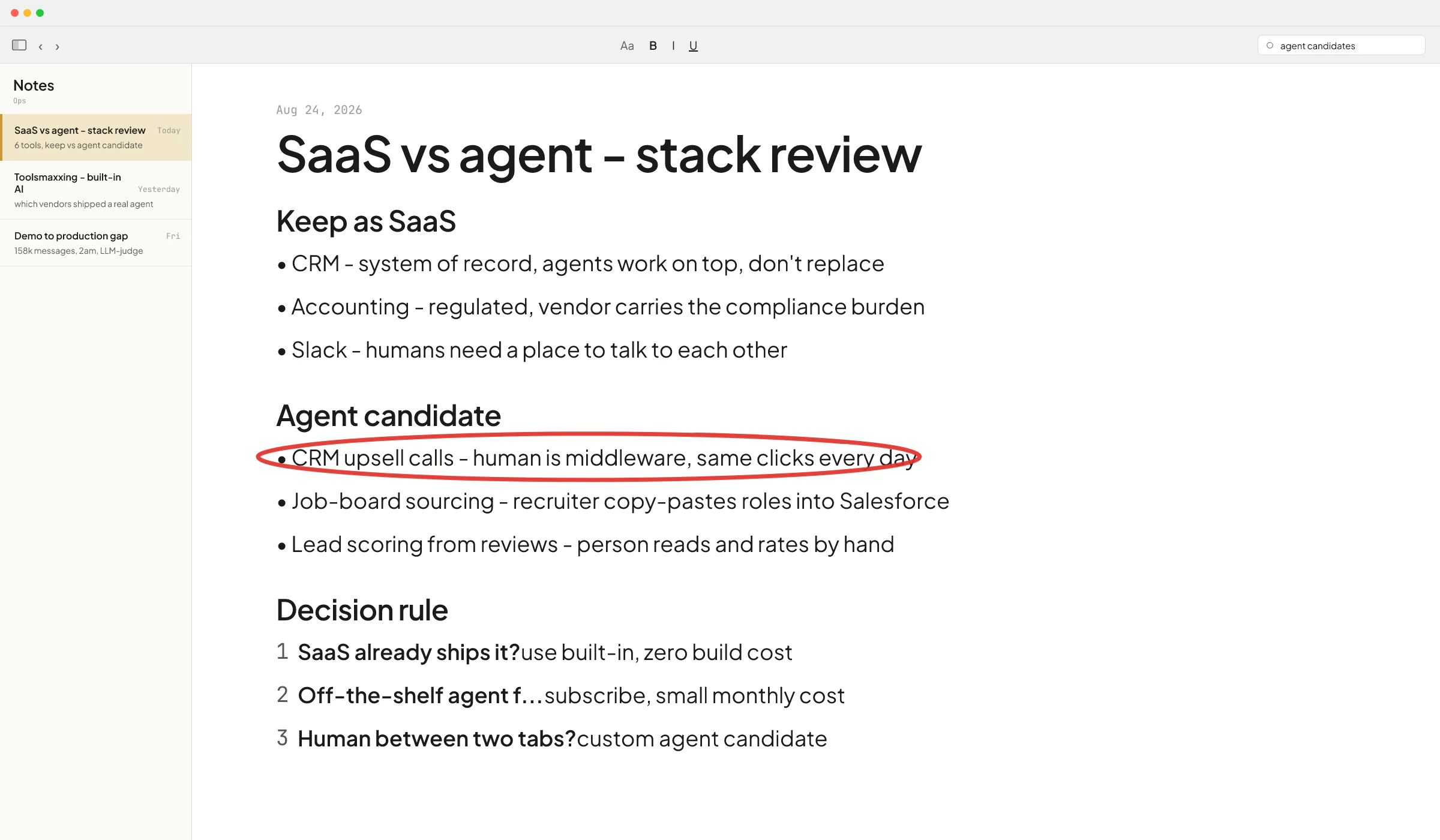
The pattern is always the same: a human is the middleware between two systems. They read from one dashboard, judge something, and take action in another. That kind of work an agent can do end-to-end.
At Sellify AI, the SaaS-shaped version of the problem was: your CRM lists hundreds of thousands of existing pest control customers, and a human has to call each one to upsell mosquito service. HomeTeam Pest Defense wasn't running that campaign at scale because the manpower didn't exist. The agent-shaped version generated over $1M in mosquito revenue in a single month and grew year-over-year mosquito sales 112% without a single new hire - because the agent read the CRM, wrote the SMS, closed the sale, took payment, and booked the tech. No dashboard, no clicks.
That's the moat - the end-to-end execution, not the chatbot on top.
For a recruitment SaaS client, the SaaS-shaped version was recruiters scrolling job boards and copy-pasting matching roles into Salesforce. The agent-shaped version monitors the job portals, filters against each recruiter's preferences, finds candidates, and sends a WhatsApp notification - so the recruiter opens the phone to a shortlist instead of opening five tabs to build one.
"Vlad has been incredible to work with. Very sharp and understands the intricacies and needs of our company. Have trusted him with important tasks, and he's always been able to get creative and deliver." - Thomas K. Lundberg, CEO of Sellify AI (Co-Owner of Fox Pest, $350M exit to Rollins)
For a hotel-renovation SaaS founder, the SaaS-shaped version was hiring people to read Google reviews and score motel leads by hand. The agent reads every review with full context, classifies chain vs independent, and quotes the actual reviews behind each score so you can trust the ranking.
None of these replaced a SaaS the client was already paying for. They replaced the human sitting between two SaaS products, doing the same work every day.
The overlap zone: agent-features inside your existing SaaS
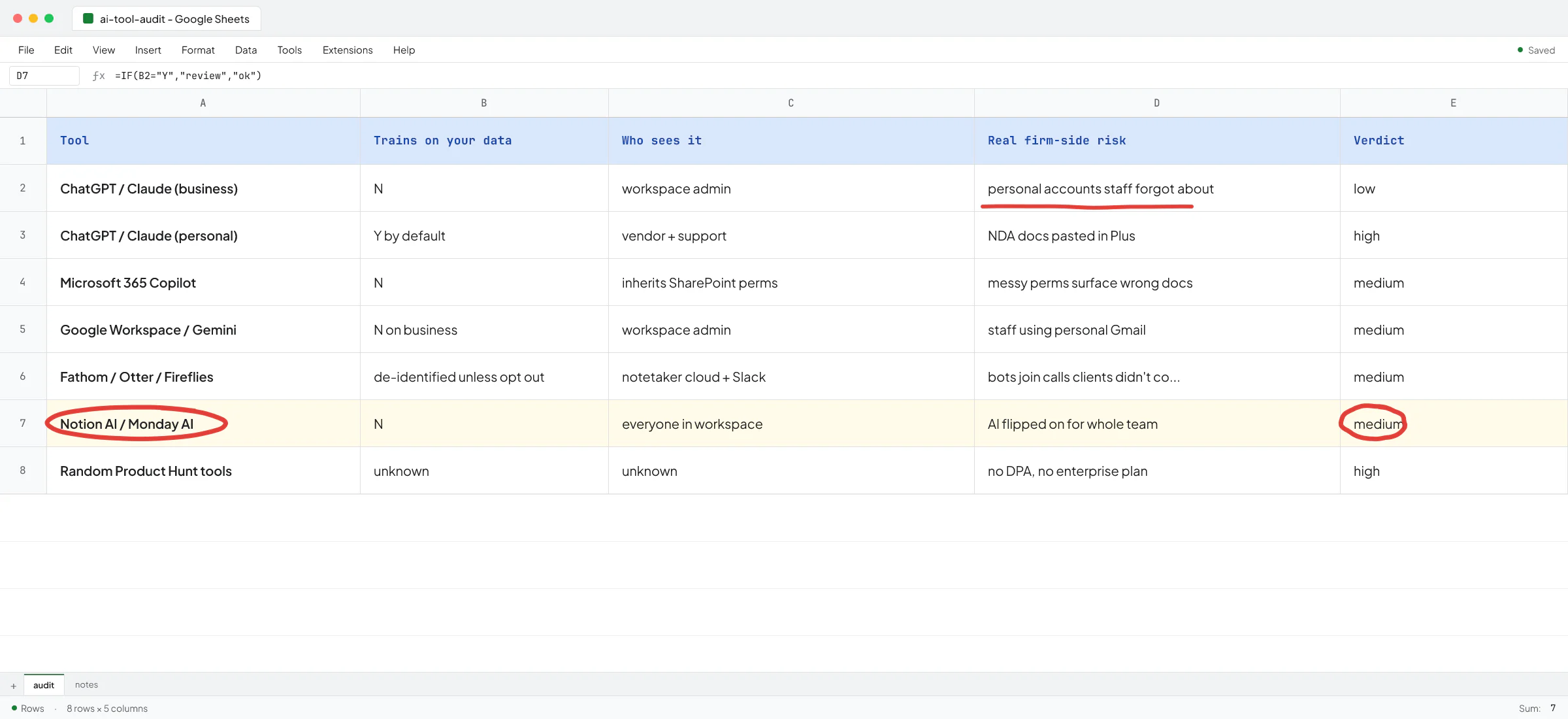
Before you commission an agent, check what the SaaS you already pay for is now shipping. This is what I call toolsmaxxing - most vendors have quietly bolted an assistant onto their product in the last 18 months.
Some are good:
- Notion AI drafts pages, translates them, and summarizes long docs inside your existing workspace.
- HubSpot's assistant writes email drafts and summarizes deal activity.
- Intercom's Fin resolves support tickets end-to-end for FAQ-style questions - genuinely agent-shaped inside a SaaS shell.
- QuickBooks now categorizes transactions with AI.
Some are just marketing:
- "AI meeting summary" that gives you the same bullet points a human intern would.
- "Smart suggestions" that recommend the button you were going to click anyway.
Rule of thumb: if the vendor's built-in agent handles a job you were paying a person to do, the seat fee is a bargain. If it just adds another button next to fields you already fill in, ignore it and don't upgrade the plan.
When to build a custom agent (and when not to)
You commission a custom agent when a few things line up:
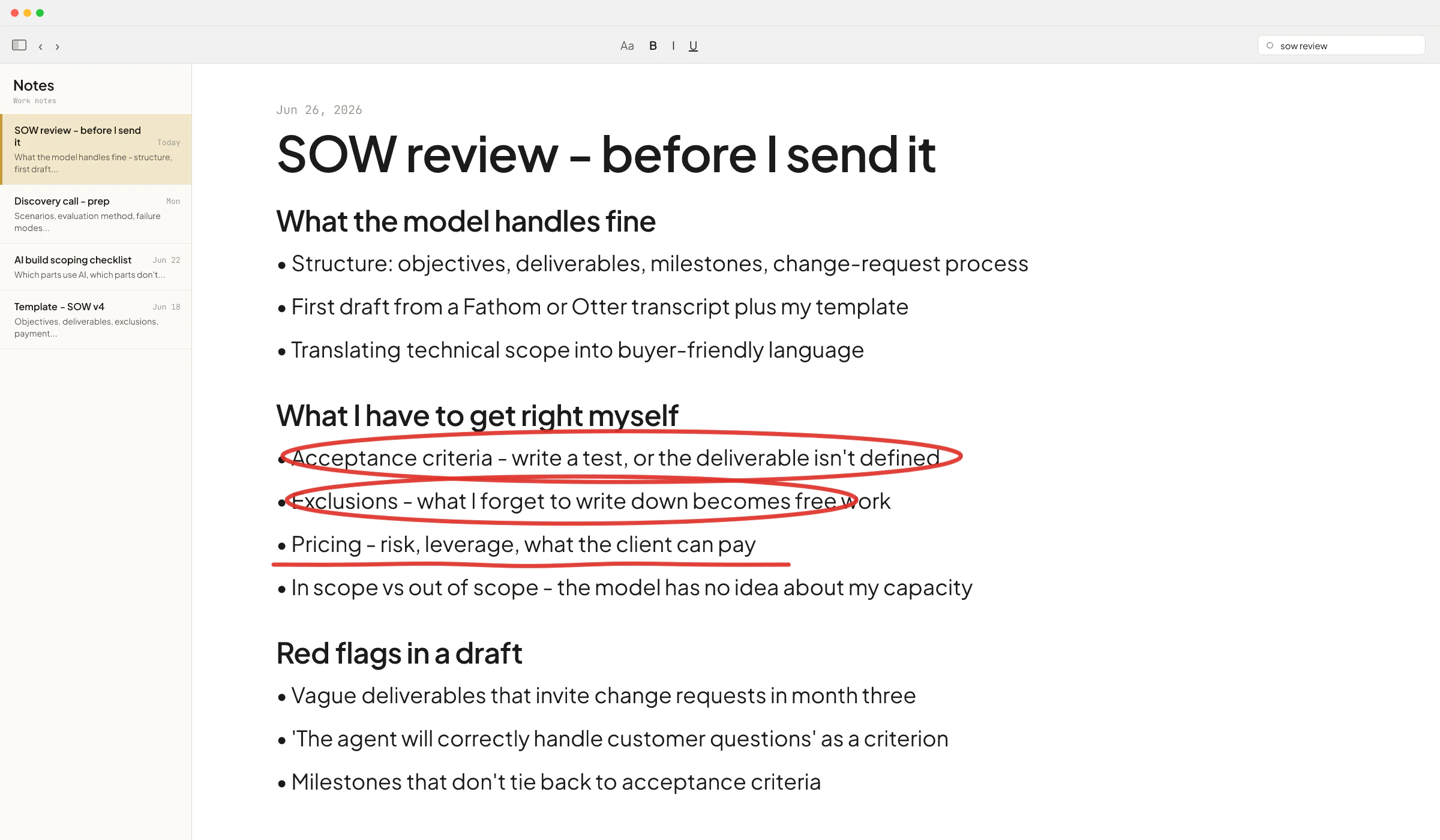
- The job is repetitive and structured enough to describe on one page. "Read the invoice PDF, extract 8 fields, write them into QuickBooks, flag anything over $5k for review" - that's a spec. "Handle my inbox better" is not.
- A human is currently the middleware between two systems. If you can name the person and the two tabs they have open, you have an agent candidate.
- The math works out. The value of what the agent unlocks (new revenue, saved headcount, faster response) is meaningfully bigger than the build cost and the ongoing LLM bill.
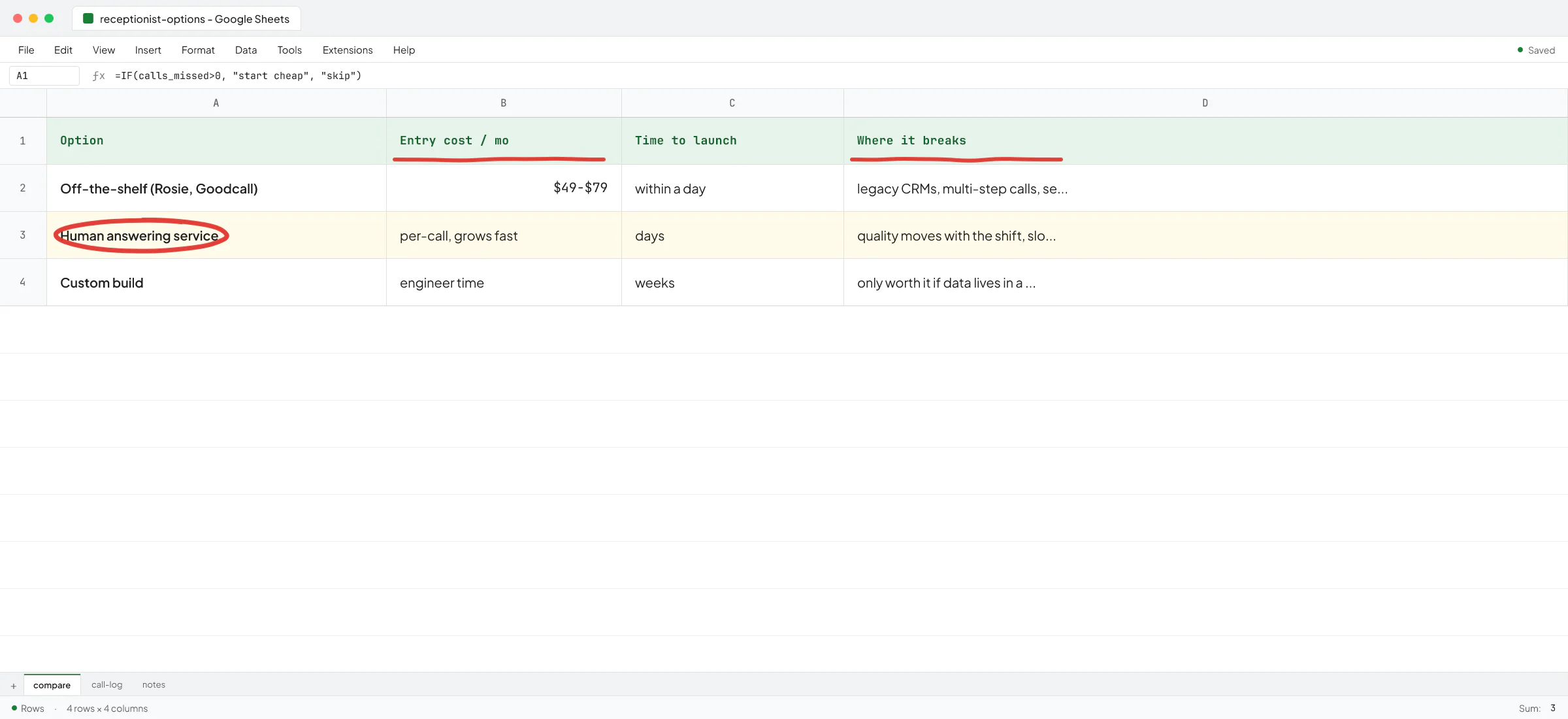
If any of those is missing, buy SaaS or bolt on an off-the-shelf agent. Don't commission a build.
And a hard warning about the demo-to-production gap. A prompt that runs great in ChatGPT for 10 test cases will fail on the 158,377th message stuck in the queue at 2am. Building agents that survive production means splitting one big agent into a team of smaller ones, adding LLM-as-judge checks so a bad output doesn't reach the customer, and writing regression tests for every edge case that ever broke. The frontier-model demo is maybe 20% of the work.
That gap is why the first freelancer that Ove André Remme, Founder of Terapivakten, hired built a broken ChatGPT-agent course builder and delivered content the client couldn't use - Ove had to come back and start over with a real build. The chat-UI shortcut is where most agent projects die.
Will AI agents replace SaaS entirely?
For most of your stack, no - not on any timeline that matters for your firm this year or next. Systems of record, regulated workflows, and human collaboration surfaces stay SaaS.
Where the answer changes: dashboards whose only job was to let a human do the same work every day. Support tickets, cross-sell campaigns, sourcing, lead qualification, first-line data entry. Those dashboards will still exist so humans can audit what the agent did, but the seat count paying to use them drops sharply, because the agent doesn't need a UI to work.
The other thing that changes is SaaS pricing. When Intercom's Fin resolves a ticket for a fraction of what a support-agent seat costs to close it manually, the vendor's own product becomes agent-shaped from the inside. That's the direction most decent SaaS is heading. You don't need to bet against them - you need to notice which of your vendors are shipping it for real and which are just adding buttons.
A decision rule you can use today
Take one job in your firm and ask three questions in this order:
- Does the SaaS I already pay for now do this with a built-in agent or assistant? If yes, use it. Zero build cost.
- Is there an off-the-shelf agent product (Fin for support, Clay for enrichment, Lindy or n8n templates for common flows) that fits? If yes, subscribe. Small monthly cost.
- Is a human still the middleware between two systems, doing the same steps every week, and would the outcome be worth 10-40 hours of build time? If yes, that's a custom agent candidate.
If none of the three fits, the job doesn't need AI yet. Leave it alone.
Where I come in
If you already know which job in your firm is agent-shaped and you want someone who's shipped these in production - across pest control, recruitment, real estate, staffing, e-commerce - book a call. If you don't know yet, book a call and we'll pick one together. The first conversation is figuring out which of the three options above fits your situation.
FAQ
Are AI agents going to replace SaaS?
For jobs where a human sits in front of a dashboard clicking the same buttons every day, yes - agents replace that work. Systems of record, regulated workflows, and team collaboration stay on SaaS. Most small firms will end up with fewer SaaS seats plus a few agents doing the end-to-end work, and not zero SaaS.
What's the difference between an AI agent and a SaaS with AI features?
An AI agent runs a task end-to-end without a human clicking through a UI. A SaaS with AI features is a normal dashboard with an assistant bolted on that helps you do the clicks faster. The test: can you go on vacation and the job still finishes? If yes, it's an agent.
Should I cancel my SaaS subscriptions and replace them with AI agents?
No. Your CRM, accounting software, and collaboration tools store the truth about your business, and agents work on top of them. Cancel a SaaS only when a specific job it did is now fully done by an agent (or by a built-in agent inside a different SaaS) and nobody on the team logs into the old one anymore.
How much does it cost to build a custom AI agent?
It depends on the job's complexity, the systems it has to integrate with, and how much reliability you need. A one-integration agent that runs a well-defined task is a very different budget from a multi-agent system that has to survive production traffic. The right way to answer this is on a discovery call - pricing without knowing the job is guesswork.
When is an off-the-shelf agent enough vs a custom build?
If the job is common (support tickets, meeting notes, lead enrichment, basic outreach) an off-the-shelf agent will usually get you most of the way for a monthly subscription. You commission a custom build when the job is specific to your business - your CRM, your data, your workflow - and no vendor has a product shaped like it.
Do AI agents work with legacy CRMs like PestPac or FieldRoutes?
Yes, but it's real integration work. Legacy CRMs often don't have modern APIs, so the agent talks to them the same way a human would - through the web UI, screen scraping, or whatever export the vendor supports. This is exactly the kind of work that built a competitive moat at Sellify AI, because most competitors were doing human-in-the-loop instead of shipping the real integration.