Case Study
Shopify AI Pipeline | Supplier CSVs to Live Listings
Every supplier sends product data in its own format, and none of them match. Someone has to reconcile all of that into listings, in the right language, for each storefront. It is the kind of work that quietly eats a person's week, every week.
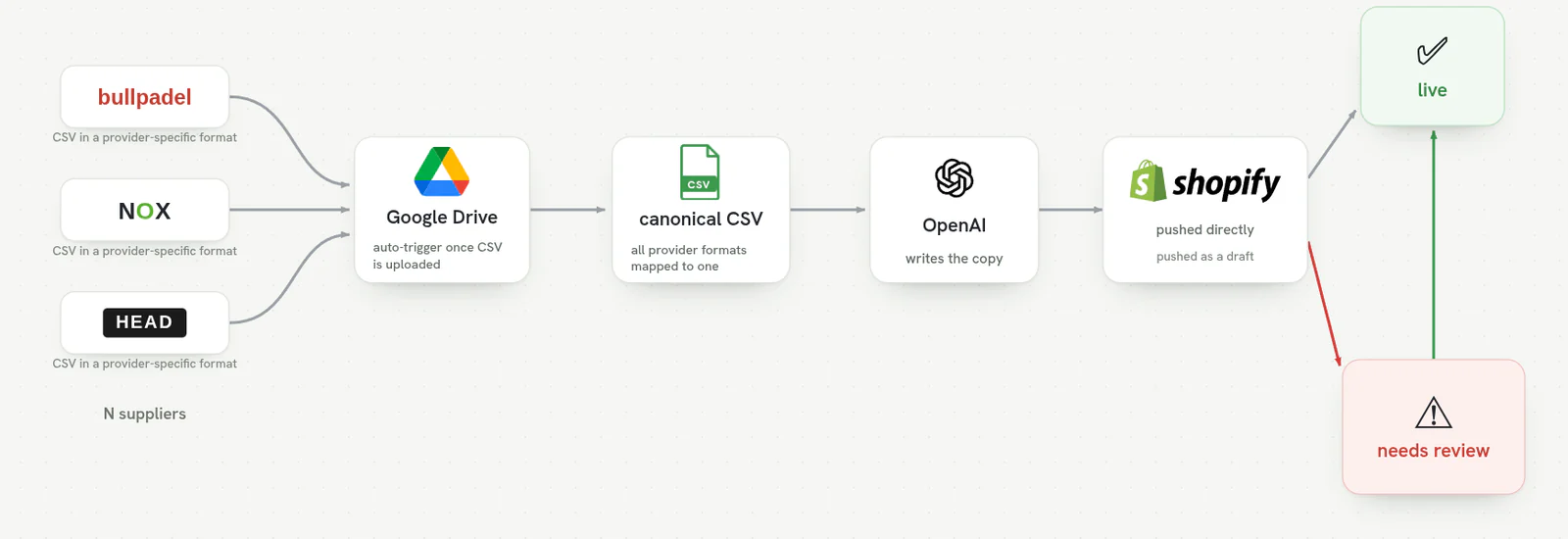
The pipeline takes over the repetitive part. Drop a supplier CSV in Google Drive and it triggers automatically: the format gets mapped onto one canonical schema, an LLM writes the product copy, SEO title and meta description in the storefront's local language, and the listing goes to Shopify.
How it works
One schema, many suppliers
The mapping step is the unglamorous part that makes the rest possible. Every provider format collapses onto a single canonical CSV, so nothing downstream has to know or care which supplier a product came from.
After that, adding a new supplier means writing one more mapping.
Confident goes live, uncertain gets a human
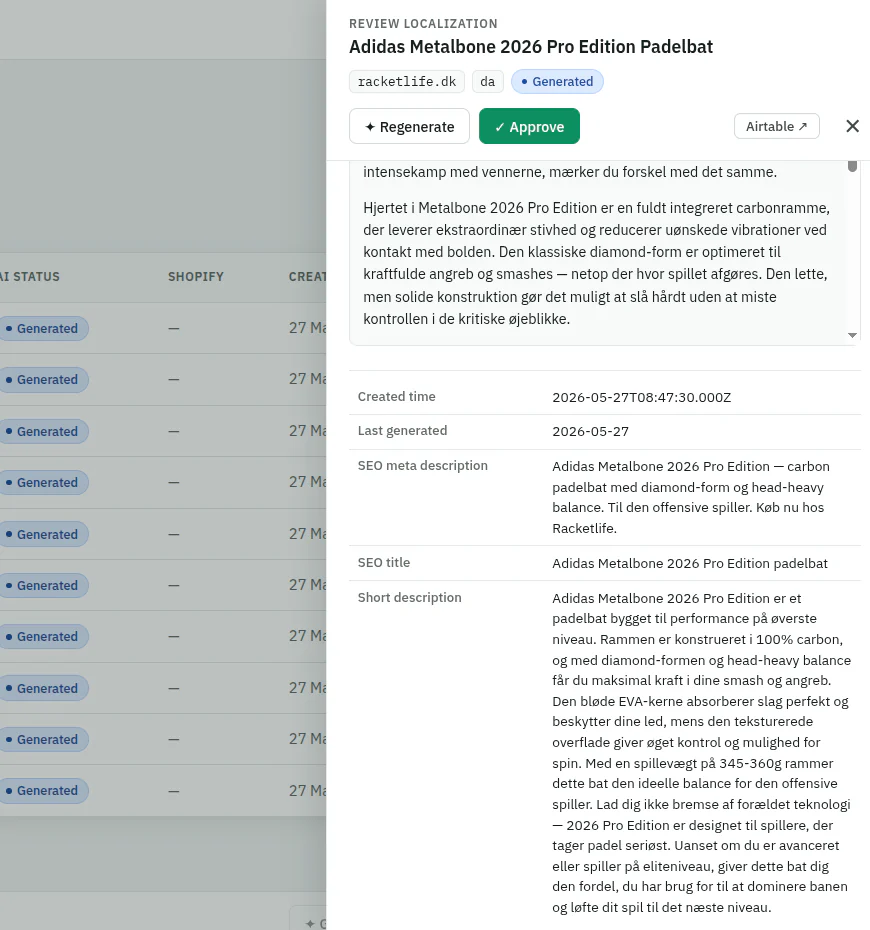
Not every generated listing deserves the same trust, so the pipeline splits them. Confident results publish straight to Shopify. Anything uncertain arrives as a draft in a review queue where a person approves, regenerates or edits it before it goes live.
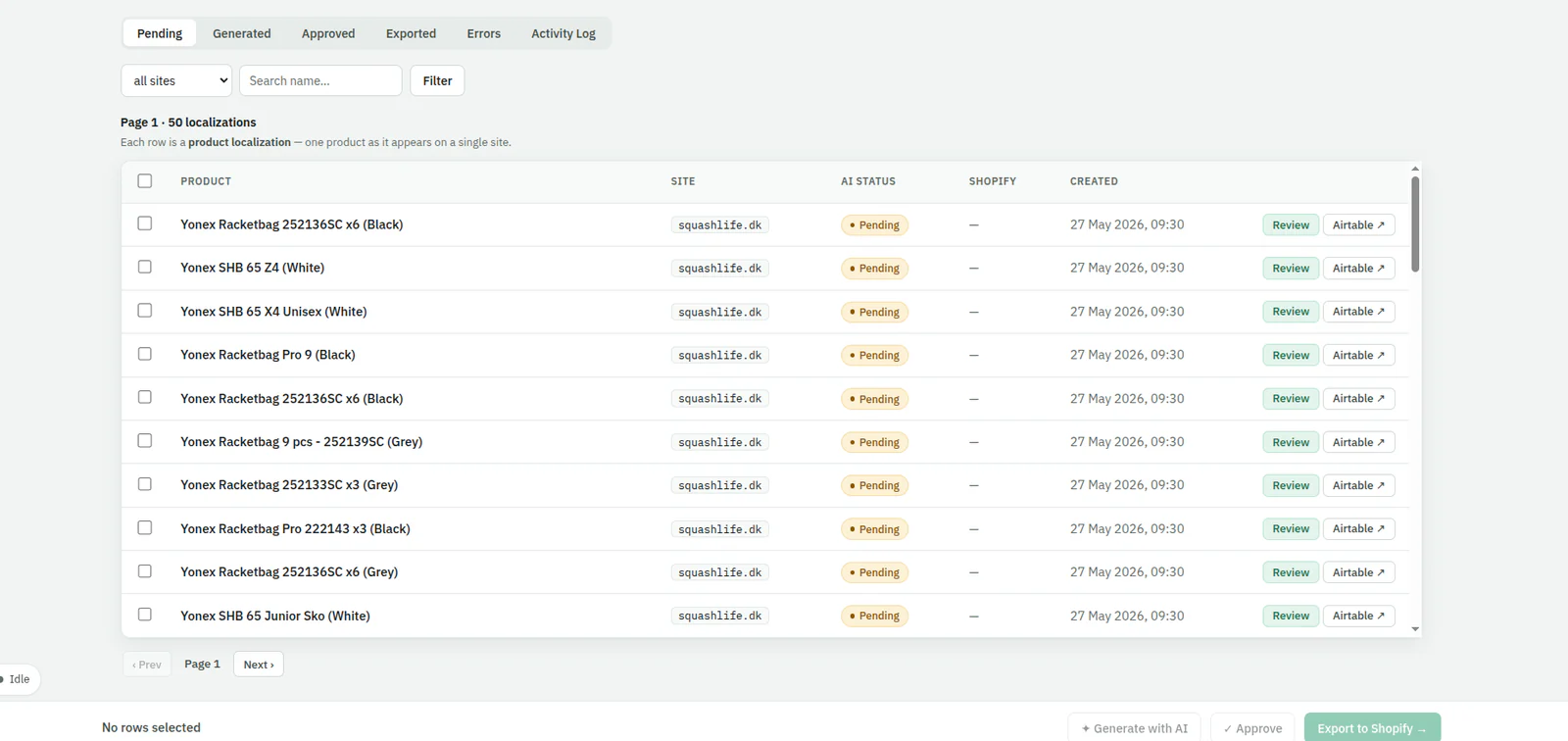
The review screen shows the generated copy next to the SEO title and meta description, with approve and regenerate right there. Each row is one product on one site, which is what makes multiple storefronts and languages manageable.
Running it across storefronts
It runs across several storefronts and languages at scale, with an audit trail and error handling so nothing fails silently. That last part matters. A pipeline that quietly drops products is worse than one that stops and tells you.
More screenshots