You run a small property management company. Maybe you also do realtor work and renovations on the side, like a lot of operators in this niche. You have a few dozen to a few hundred doors, a CRM like Follow Up Boss, a property platform like DoorLoop or AppFolio, and a Google Drive full of receipts and addendums. Tenants text you at 9pm about a leaking faucet. Owners want reports. You draft contracts in ChatGPT now, which felt like magic the first time.
You keep hearing AI will change property management. Most articles on the topic treat the work as one thing, and it isn't. There are a handful of places where AI saves real hours this month for a small property management firm, and a handful where it quietly creates a tenant-trust or money problem. This guide walks through both, in the order I'd try them.
Where AI pays back fast for a property management firm
Start with work that has high volume, low judgment, and a human reviewer in the loop. Tenants and owners are still on the other end of every message you send, so the bar isn't "AI never makes a mistake" - it's "AI doesn't make a mistake your reviewer would miss."
Triaging maintenance requests before they hit your inbox
This is the highest-value first project for most small firms. A tenant sends a message (text, email, a request through the DoorLoop tenant portal, whatever else) and somebody on your side has to figure out where it's leaking, which unit, is it urgent, do we need photos, which vendor.
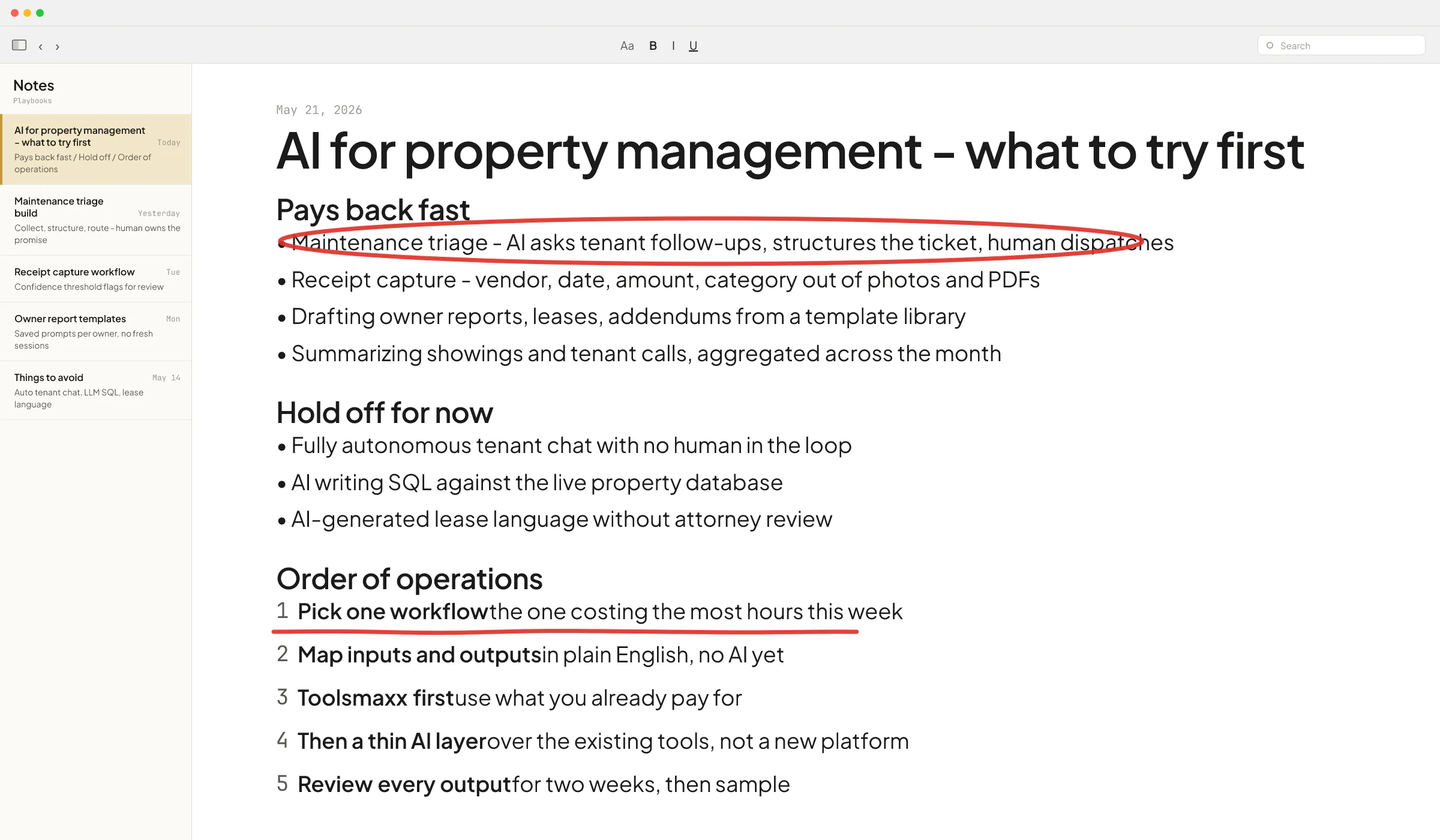
AI is good at this. A short conversational agent can ask the tenant follow-up questions ("which bathroom?", "can you send a photo?", "is water still coming out?"), categorize the request, tag urgency, and write a clean summary into your property management software. Tenant gets a fast first response, your team gets a structured ticket instead of a five-message text thread to parse.
The trap to avoid: don't let the AI commit to a service window, promise a vendor, or close the ticket. It collects, summarizes, and routes. A human decides what to dispatch. Tenant trust is your business, and one confidently-wrong AI promise about "a technician will be there tomorrow at 2pm" will cost you more than the automation saves.
I built almost exactly this pattern for a recruitment AI startup client - a "scout agent" that monitors job portals, asks the recruiter clarifying questions about preferences, and sends a structured WhatsApp summary so the recruiter can act in one tap. Same shape: AI does the intake and the structuring, the human owns the decision. The architecture transfers cleanly to maintenance triage.
Pulling expenses out of receipt photos and PDFs
If you do renovations or any kind of project-based work, you live in receipts. The pattern most operators end up in is a Google Sheet per project, somebody texting and emailing receipts in from the field, and the owner manually typing the amounts and categories in at the end of the week.
AI is good at the structured-extraction half of this. You can drop a receipt image or a PDF into a model and get back vendor, date, amount, line items, and a category guess. From there it's a script that appends a row to the project's sheet and flags anything below a confidence threshold for review.
It will get categories wrong sometimes. Hardware-store receipts especially - the same store sells supplies that belong on three different project budgets. Build the review step in from day one and don't bolt it on later. One operator I spoke with framed his worry as "if I miscalculate an expense, the company could lose money or I'm overcharging the client. So it got to be very meticulous." He's right. Being meticulous takes more than a good prompt; it takes the review step.
Drafting owner reports, leases, and addendums
You're already doing this in ChatGPT. The leverage isn't "use AI to draft" - that's a solved problem. The leverage is making the draft come out right the first time, for every owner, without re-typing the boilerplate. That means a small library of templates and prompts your team uses, and not a fresh ChatGPT session per document.
If you're worried about pasting tenant or owner info into ChatGPT, that's a real concern and worth thinking through deliberately - here is a guide on what's safe to paste on which plan.
Summarizing showings, calls, and tenant conversations
If you record showings or owner calls (Fathom, Otter, Fireflies, or even just a phone recorder), AI summaries are nearly free now and they're good. The thing to add on top is aggregation across calls. Not "what did this one tenant say" but "what are the top three complaints across every tenant call this month, with quotes." That's the report that changes how you run the business, and most tools don't do it out of the box. It's usually a one-evening Claude project.
Where AI quietly burns money in property management
These are places I'd avoid in your first three months. AI can do them, but the failure mode bites you in tenant trust or money.
Fully autonomous tenant chat with no human in the loop
The temptation is real. Tenants text 24/7, you can't, and an AI chatbot that "handles it all" sounds like a dream. Two problems.
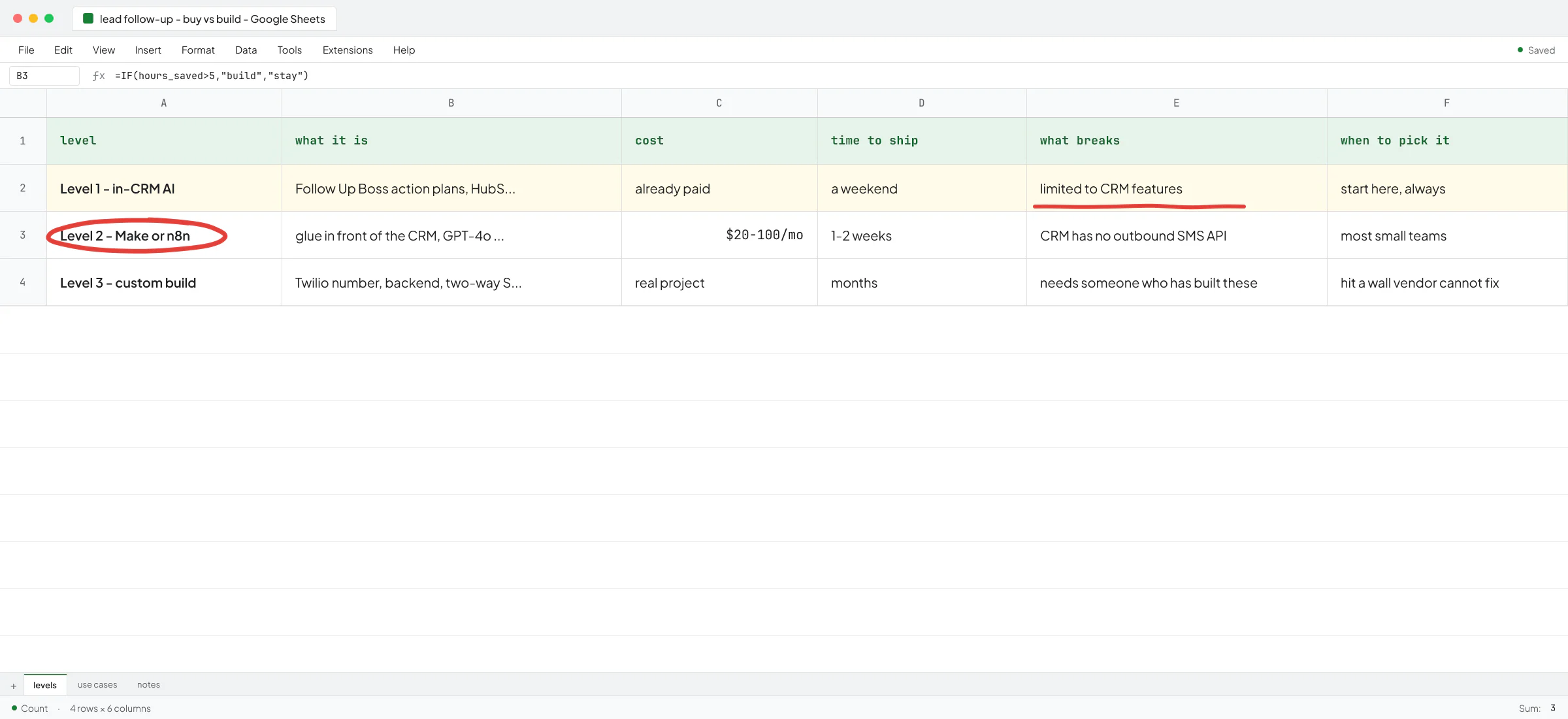
First, the Follow Up Boss API records text messages as logs only and doesn't actually send them to recipients, so if your CRM is FUB the easy outbound-SMS path through their API isn't there. You end up routing through Twilio or another provider and stitching it back. That's fine but it's a build, not a one-click.
Second, an AI that commits to action ("yes, we'll get someone out Tuesday") without a human checking is one bad message away from a complaint. The collect-structure-route architecture from the maintenance triage section above works fine here. Full auto doesn't.
Letting AI write SQL against your live property database
I had a client whose team (zero AI experience) hooked an analytics agent up to a LangChain SQL library that talked directly to their production database. Row-level permissions were not set up correctly. When I got more context on the project, I realized the whole thing was really five or six specific questions the owner kept asking: occupancy by property, late payments this month, rent roll, expenses by project. The right shape was hardcoded parameterized SQL queries behind a small chat interface, with the AI only deciding which question is being asked. Yes you trade off flexibility (you can't ask any question) but in return you get a system that doesn't accidentally drop a table.
If anyone pitches you "natural language to SQL on your DoorLoop or AppFolio data" - ask them exactly how they restrict which queries can run.
AI-generated lease language without legal review
Lease and addendum drafting is fine. Lease language going out without your attorney's eyes on the template is where it goes wrong. AI will produce something that reads professional and is subtly wrong for your state. Get the template right once with your attorney, then let AI fill the variables.
Not legal advice - check with a real estate attorney in your state.
What the workflow actually looks like
For an owner running 50-300 doors with no in-house tech person, the order I'd run:
- Pick the one workflow that costs you the most hours this week. For most firms it's maintenance triage or receipt-to-project capture. Pick one and not three.
- Map the inputs (tenant text, emailed receipt, owner call) and the desired output (a clean ticket in DoorLoop, a row in the project sheet) in plain English. No AI yet. This is the part most teams skip and most projects die on.
- Try toolsmaxxing first. If DoorLoop's auto-assign on tenant requests covers 80% of the workflow, use that and stop. There's a longer piece on toolsmaxxing - the short version is that paying for new tools or commissioning custom work before you've used what you already pay for is how budgets disappear.
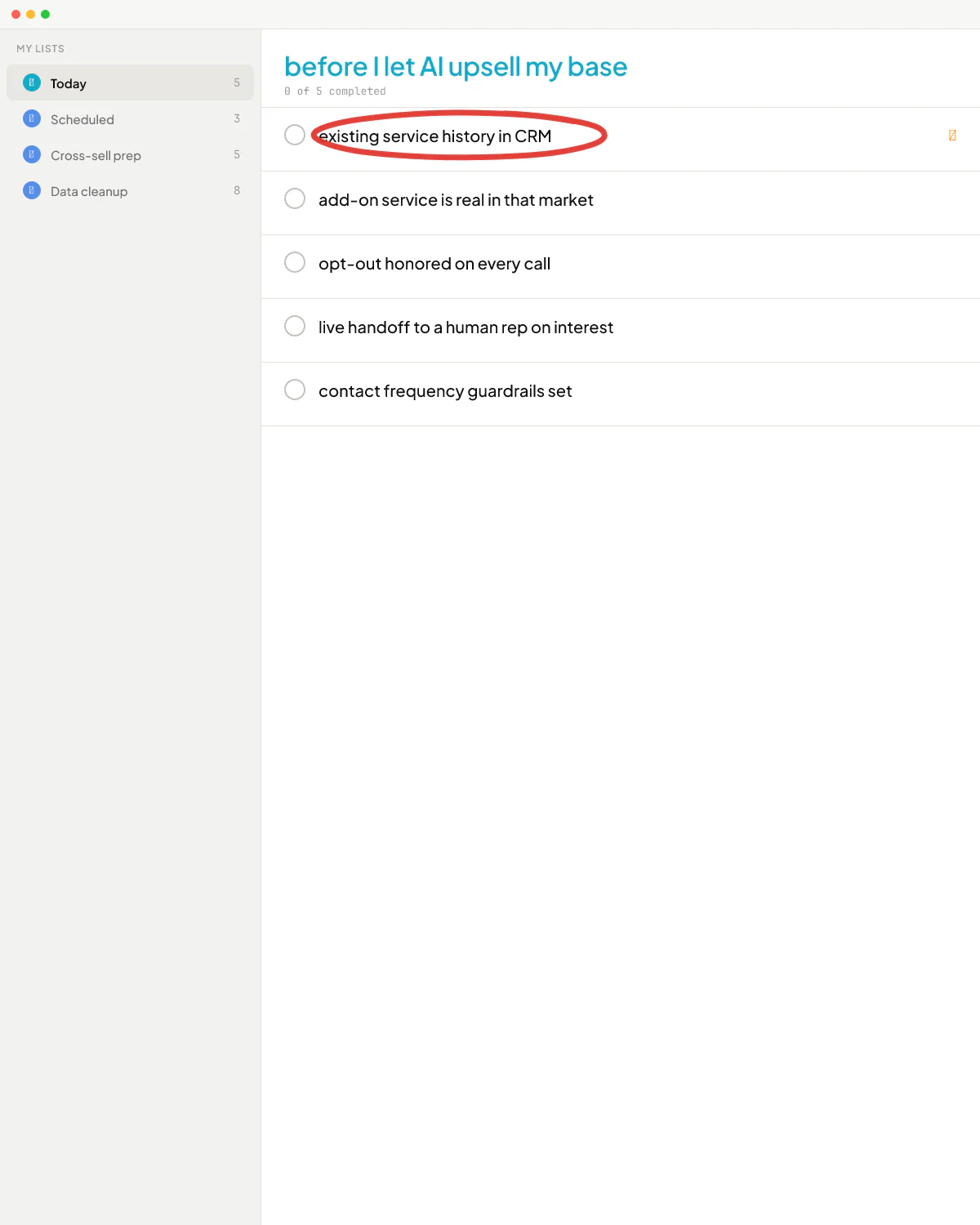
- If toolsmaxxing doesn't get you there, add AI as a thin layer over your existing tools. Not a new platform. A script that listens, asks, structures, and routes into the system you already use.
- Review every output for the first two weeks. Then sample weekly. Then monthly. Don't skip steps.
Buy a SaaS, hire someone part-time, or commission a custom build
You're going to face this decision once you pick a workflow. There are a few honest paths.
- Purpose-built SaaS. Works if your workflow is generic. Tenant-portal maintenance requests, auto-categorized receipts, owner reporting are all available off the shelf in some form. You pay a monthly per-door fee and accept a workflow that bends to the tool's defaults. For most small firms this is the right starting point.
- Hiring a part-time technical person. Works if you have several workflows to automate, you want someone who learns your business, and you're comfortable managing the work. One operator I talked to framed it as wanting "an IT person that just kind of oversees the architecture of the entire company so that we can be more efficient." That role is real and underrated. The trap is hiring before you know what you actually want built, so you end up paying for someone to explore.
- Custom AI engineering work. Fits when the workflow is specific to how you run, the off-the-shelf options don't compose, and the savings are large and recurring. The maintenance-triage agent described above sits in this zone for many firms, and so does project-receipt capture if you do enough renovation volume. The CRM-integrated AI work Ivan Nikolaichuk and I shipped together at Sellify AI for two years - legacy CRM integration, AI doing the customer-facing first touch, human owning the decision - maps closely onto how a small property management firm wants its tenant and owner flows to run.
The "AI consultant vs AI engineer" question comes up a lot at this point - the short version is in the comparison guide.
A story about getting maintenance triage wrong, then right
A pattern I see often: an operator buys a tenant chatbot, sets it up over a weekend, plugs it into the website, and watches it answer questions for a week. Then a tenant asks "can someone fix my AC by Thursday" and the bot says "yes, we'll schedule that." Nobody on the team saw it. Thursday comes. No technician. The tenant leaves a one-star review.
The fix is rarely a better prompt. It's architectural: the AI never commits to action, it collects information, drafts a response, and waits for a human tap-to-send for anything that creates an obligation. Same agent, different boundary. The tenant still gets a fast first reply ("got it, sounds like the AC, what's the unit number, can you send a photo, I'll have someone reach out today"), and the human owns the promise.
Ove André Remme, founder of Terapivakten in Norway, hired another freelancer first for a content-generation project and got a ChatGPT-based build that didn't work. He came back to me after two weeks of lost time. In his video testimonial he said: "you were directly pointing to the issue that I experienced." The same shape applies to property management firms looking at tenant chatbots. The first answer most builders give ("we'll do it all in a custom GPT") is usually the wrong answer for anything that touches a paying customer.
Ready to scope your first AI workflow?
If you have a workflow in mind - maintenance triage, receipt capture, owner reporting, something else - a short call gets you a real read on whether it's a SaaS-fits-fine job, a one-week build, or something to wait on. Bring the workflow and not a generic "we want to use AI" question, and you'll get a useful conversation.
FAQ
What's the best AI tool for property managers right now?
There isn't one. The right tool depends on the workflow. For tenant-facing chat and maintenance intake, look at what your property management platform already offers (DoorLoop, AppFolio, Buildium all have some version of this) before buying a separate tool. For receipt capture, an off-the-shelf expense tool with OCR usually beats a custom AI build at small volume. For owner reports and lease drafts, ChatGPT Business or Claude with a small set of saved prompts is usually enough.
Can I use ChatGPT to answer tenant messages directly?
You can, but don't let it send messages on its own. The pattern that works is ChatGPT (or a custom agent) drafts the response, a person on your team reviews and sends. The reason isn't ChatGPT's quality - it's that any commitment made to a tenant becomes a real obligation, and one confidently-wrong AI promise costs more than the time saved.
Is it safe to put tenant data into ChatGPT?
It depends on the plan. ChatGPT Free and Plus may use your data for training unless you turn it off. ChatGPT Business, Team, and Enterprise don't. For tenant PII, lease terms, and owner financials, use Business or above, or don't paste it. There is a full guide on this in the ChatGPT confidentiality post.
Will AI replace property managers?
Not for the foreseeable future. AI is good at the high-volume, low-judgment parts of the job (intake, summarization, drafting, extraction) and bad at the parts that need accountability and context (vendor decisions, tenant disputes, owner relationships, anything legal). The realistic shift is one property manager handling more doors because the busywork shrinks.
How much does a custom AI build for a property management firm cost?
It depends on scope. A single-workflow build (like maintenance triage routed into DoorLoop) is a different size of project from a multi-workflow system covering triage, receipts, and reporting. The honest answer comes out of a scoping conversation - the same workflow looks very different in a 50-door firm vs a 500-door firm. Worth a short call to figure out which bucket you're in.
Should I hire someone full-time for AI or contract it out?
Contract first. Full-time hires before you know which workflows are worth automating is how budgets disappear. A contractor builds the first one or two automations, you learn what is valuable in your operation, and then you make the hiring call from a real position instead of a guess.